

Starting a business is exciting, but the legal setup can feel confusing at first.
You may have the business idea, the name, the product, or the service ready. Then suddenly you run into questions about LLCs, registered agents, state filing fees, EINs, operating agreements, and compliance.
That is where many beginners get stuck.
The good news is that starting an LLC is not as complicated as it looks when you break it into clear steps. An LLC gives your business a legal structure, helps separate your personal and business finances, and can make your company look more professional from day one.
For many small business owners, freelancers, online sellers, consultants, creators, and side hustlers, an LLC is one of the most practical business structures to start with.
And if you do not want to handle the paperwork yourself, Bizee makes the process much easier. Bizee, formerly known as Incfile, helps entrepreneurs form LLCs online with a $0 formation package plus the required state filing fee. That makes it one of the most beginner friendly options for people who want professional filing help without paying a high service fee.
In this guide, you will learn what an LLC is, why it matters, how to start one step by step, what mistakes to avoid, and why Bizee is a smart choice if you want a simple, affordable way to get your business officially formed.
What Is an LLC?
An LLC, or Limited Liability Company, is a legal business structure that separates you from your business.
That separation is important because it can help protect your personal assets if your business faces debt, legal claims, or financial trouble.
For example, if your LLC is sued or cannot pay a business obligation, your personal savings, home, car, or personal property are generally not supposed to be used to pay those business debts, as long as your LLC is properly formed and managed.
An LLC is popular because it gives business owners a good balance of protection and flexibility. It is easier to manage than a corporation, but it still gives your business a more serious legal identity than operating as a sole proprietor.
Many people choose an LLC because it offers:
Personal liability protection
Flexible tax treatment
Less paperwork than a corporation
A professional business structure
Simple ownership and management options
An LLC can work well for many types of businesses, including freelance businesses, online stores, consulting agencies, digital marketing firms, family businesses, local service businesses, real estate businesses, and content based businesses.
Why Do So Many People Choose an LLC?
There is no perfect business structure for everyone, but an LLC is a strong choice for many beginners.
The biggest reason is protection. When you run a business without a formal structure, your personal and business life can be closely tied together. If something goes wrong, that can create risk.
An LLC helps create a legal wall between you and your business.
It also gives your business a more professional image. Clients, banks, vendors, and partners often take a registered business more seriously than a casual side project.
Another reason people like LLCs is flexibility. You do not usually need the same level of corporate formalities required for a corporation. You can run the business with fewer meetings, fewer resolutions, and less complicated management.
For tax purposes, many LLCs also use pass through taxation. This means the profits usually pass through to the owner’s personal tax return instead of being taxed once at the business level and again at the owner level.
That simplicity is one reason LLCs are so common among small business owners.
Is an LLC Right for You?
An LLC may be a good fit if you are starting a real business and want to protect yourself early.
It can make sense if you want to separate personal and business finances, build credibility, open a business bank account, sign contracts under a company name, or prepare your business for growth.
An LLC may be especially useful if your business involves clients, customers, payments, contracts, products, services, or any kind of risk.
You may not need an LLC immediately if you are only testing an idea with no income, no clients, and no real business activity yet. But once you start selling, marketing, signing agreements, or taking payments, forming an LLC becomes much more practical.
Many entrepreneurs prefer to form an LLC early because it gives them a stronger foundation from the start.
This is where Bizee can help. Instead of trying to figure out every state form on your own, you can use Bizee to prepare and file your LLC paperwork online. Their $0 formation package means you only pay the state filing fee for the core filing service, which keeps the starting cost low.
How to Start an LLC
Starting an LLC usually involves a few key steps. The details can vary by state, but the overall process is similar in most places.
Here is how to do it properly.
Step 1: Choose a Name for Your LLC
Your LLC name is one of the first legal decisions you will make.
It is not just a branding choice. Your name will appear on state records, bank documents, tax forms, contracts, invoices, and official business paperwork.
Most states require your LLC name to be different from other registered business names in that state. Your name also usually needs to include a business structure designator such as “LLC” or “Limited Liability Company.”
Some words may be restricted. For example, terms related to banking, insurance, education, or government agencies may require special approval.
When choosing your LLC name, keep it simple and flexible.
A good business name should be easy to spell, easy to remember, relevant to your business, and broad enough to grow with you.
For example, if you call your business “Dallas Wedding Photography LLC,” that may work today. But if you later expand into corporate events, video production, or another city, the name may feel too narrow.
Before you decide, check whether the domain name is available. Also check social media handles if you plan to build a brand online.
Bizee can make this step easier because its LLC formation process includes a business name search during the filing process. That helps you avoid wasting time on a name that may not be available in your state.
Step 2: Choose the State Where You Want to Form Your LLC
Most people should form their LLC in the state where they live and actually do business.
This is usually the simplest and most affordable route.
You should usually choose your home state if you operate there, work from there, serve local customers there, or want the easiest compliance setup.
Some entrepreneurs hear about forming an LLC in Delaware, Wyoming, or Nevada and assume those states are always better. That is not always true.
Those states can make sense in certain situations, especially for specific tax, privacy, legal, or investment reasons. But for a beginner running a normal small business, forming outside your home state can create extra paperwork and extra fees.
If you form in another state but still operate in your home state, you may need to register as a foreign LLC in your home state too. That means you could end up paying fees in two states instead of one.
For most small business owners, the practical choice is simple: form your LLC where you actually do business.
Bizee can help here because it provides state specific filing support. You choose your state, enter your business information, and Bizee guides you through the formation process based on that state’s rules.
Step 3: Appoint a Registered Agent
Every LLC needs a registered agent.
A registered agent is the person or company responsible for receiving legal documents and official state notices on behalf of your business.
This may include lawsuits, tax notices, annual report reminders, and other official mail.
A registered agent usually must have a physical address in the state where your LLC is formed and must be available during normal business hours.
You generally have three options.
You can be your own registered agent, use a trusted friend or family member, or hire a registered agent service.
Being your own registered agent may save money, but it also has drawbacks. Your address may become part of public records, and you must be available during business hours to receive important documents.
Using a professional registered agent service is often better if you work from home, travel often, want more privacy, or do not want to risk missing important legal notices.
This is one of the biggest reasons Bizee is attractive for new LLC owners. When you form an LLC through Bizee, registered agent service is included free for the first year. That gives you a more professional setup without adding a large extra cost at the beginning.
For beginners, that is a real advantage.
Step 4: File the Articles of Organization
The Articles of Organization is the document that officially creates your LLC.
Some states use slightly different names, but the purpose is the same. This filing tells the state that your LLC exists.
The form usually asks for your LLC name, business address, registered agent information, management structure, and basic details about the owners or organizers.
Once the state approves this filing, your LLC is officially formed.
You can file directly with the state yourself, but many beginners find the process confusing. Every state has its own filing system, rules, fees, and wording.
Bizee handles this step for you. You provide the required information online, and Bizee prepares and submits the formation documents to the state.
This is the main reason many entrepreneurs use Bizee instead of doing everything manually. You avoid guessing, reduce paperwork stress, and get a more guided experience.
Bizee’s entry level formation package starts at $0 plus the state filing fee, which means you can get filing help without paying a separate formation service fee for the basic package.
Step 5: Create an Operating Agreement
An Operating Agreement is an internal document that explains how your LLC will operate.
Even if your state does not legally require one, it is still smart to have it.
Your Operating Agreement can explain who owns the LLC, how profits and losses are shared, how decisions are made, what each owner contributed, what happens if an owner leaves, and how disputes will be handled.
If you have a single member LLC, you may think this document is not necessary. But it still helps show that your business is separate from you personally.
If you have a multi member LLC, this document becomes even more important. It helps prevent confusion between owners and gives everyone clear expectations from the beginning.
A handshake agreement may feel fine at the start, but it can create problems later. Ownership, money, responsibilities, and decision making should be written down.
Bizee offers packages and add ons that can help with key formation documents like an Operating Agreement. If you want a more complete setup, this can save time compared to searching for templates on your own.
Step 6: Get an EIN

An EIN, or Employer Identification Number, is a federal tax ID number for your business.
You may need an EIN to open a business bank account, hire employees, file certain tax forms, and keep your business finances separate from your personal finances.
Even if you are a single owner LLC with no employees, getting an EIN is often a good idea. It makes your business look more professional and helps keep your personal Social Security number off certain business documents.
You can apply for an EIN directly through the IRS. Some business owners prefer to do this themselves because the IRS does not charge for it.
Others prefer to let a formation service help with the process because they want everything handled in one place.
Bizee gives you that option. If you want a more hands off setup, you can choose a package or add on that includes EIN assistance.
Step 7: Open a Business Bank Account
Once your LLC is approved and you have your EIN, the next step is opening a business bank account.
This step is very important.
A business bank account helps keep your personal and business money separate. That separation supports clean bookkeeping, easier tax preparation, and stronger liability protection.
Mixing personal and business money is one of the biggest mistakes new LLC owners make. If you use your personal bank account for business income and expenses, it can become difficult to prove that your LLC is truly separate from you.
A bank may ask for your EIN, approved LLC documents, Operating Agreement, business address, and owner identification.
Once the account is open, use it properly. Deposit business income into the business account. Pay business expenses from the business account. Avoid using it for personal spending.
This habit will make your business easier to manage from the beginning.
Step 8: Get Any Required Business Licenses or Permits
Forming an LLC does not automatically mean you are legally allowed to operate every type of business.
Depending on your state, city, county, and industry, you may need licenses or permits.
A marketing consultant may need very little. A restaurant, salon, construction company, childcare provider, or health related business may need several approvals.
Common licenses and permits can include general business licenses, sales tax permits, professional licenses, health permits, zoning approvals, and home occupation permits.
This is an important point because an LLC and a business license are not the same thing.
Your LLC creates the legal business entity. Licenses and permits give you permission to conduct certain business activities in a specific location or industry.
Before launching, check your local and state requirements so you do not accidentally operate without the right approvals.
Step 9: Understand Your LLC Tax Responsibilities

Starting an LLC is not only about filing paperwork with the state. You also need to understand your tax responsibilities.
By default, a single member LLC is usually taxed like a sole proprietorship. A multi member LLC is usually taxed like a partnership. Some LLCs later choose S Corporation taxation if it makes financial sense.
Your LLC may need to deal with federal income tax, state income tax, self employment tax, sales tax, payroll tax, franchise tax, or annual state fees.
The exact requirements depend on your business, income, employees, location, and tax election.
This is an area where many beginners make mistakes. They assume that once the LLC is approved, everything is complete. But formation and taxes are different parts of the business setup.
It is smart to keep records from day one. Track income, expenses, invoices, receipts, software subscriptions, contractor payments, and business purchases.
If your business is growing or your tax situation is not simple, speak with an accountant. A good accountant can help you choose the right tax setup and avoid expensive mistakes.
Step 10: Stay Compliant After Forming Your LLC
Forming your LLC is only the beginning.
After your LLC is approved, you need to keep it in good standing.
Depending on your state, you may need to file annual reports, pay renewal fees, maintain a registered agent, update your business address, renew licenses, and keep proper business records.
If you ignore these requirements, your LLC can fall out of good standing. In serious cases, the state may administratively dissolve your LLC.
That is why compliance matters.
Bizee can be helpful here because it gives entrepreneurs a more organized way to start and manage the formation process. Having a professional registered agent also helps ensure important documents are received properly.
This is especially useful for busy founders who do not want to miss state notices or legal mail.
How Much Does It Cost to Start an LLC?
The cost to start an LLC depends mainly on your state.
Every state charges a filing fee. That fee is paid to the state, not to the formation company. Some states are relatively affordable, while others are more expensive.
Your total cost may include the state filing fee, registered agent service, Operating Agreement preparation, EIN assistance, annual report fees, business license fees, and optional services.
The cheapest way to form an LLC is to file everything yourself directly with the state. But that means you are responsible for understanding the forms, the process, the registered agent requirement, and the follow up steps.
The better option for many beginners is using a service like Bizee.
Bizee’s $0 formation package plus state fee is a strong choice because you get help preparing and filing your LLC without paying a high formation service fee. You also get registered agent service free for the first year when you form through Bizee.
That combination makes Bizee one of the best options for entrepreneurs who want to save money but still want a guided filing experience.
Bizee Pricing: What You Should Know
Bizee is popular because its entry level LLC formation package starts at $0 plus state filing fees.
That means you pay the required state fee, but Bizee does not charge a separate service fee for the basic formation package.
For many beginners, this is enough to get started.
Bizee also offers paid packages for people who want more help, more documents, or a more complete setup. These may include features such as EIN assistance, an Operating Agreement, banking related documents, business contract templates, or faster filing options depending on the package selected.
The best option depends on how much you want handled for you.
If you are comfortable doing a few things yourself, Bizee’s $0 package is a great starting point.
If you want a more complete business setup with extra documents and support, one of the paid packages may be worth considering.
Either way, Bizee is especially appealing because you can start with a low upfront formation cost and only pay the state required fee for the basic package.
How Long Does It Take to Start an LLC?

The time it takes to start an LLC depends on your state.
Some states process online filings quickly. Others may take several business days or longer. Mail filings usually take more time.
The full setup also depends on how quickly you choose your name, gather your information, file your paperwork, get your EIN, and open your bank account.
If you use Bizee, the process is more guided. You enter your information online, choose your package, and Bizee handles the state filing process for you.
That can save time and reduce confusion, especially if you are forming your first LLC.
Common Mistakes to Avoid When Starting an LLC
Many first time business owners make simple mistakes that later create bigger problems.
One common mistake is choosing the wrong state for the wrong reason. Do not form in another state just because someone online says it is cheaper or better. If you operate in your home state, forming elsewhere may create extra registration and compliance costs.
Another mistake is choosing a weak business name. Your LLC name should be clear, professional, and flexible enough for future growth.
Skipping the Operating Agreement is also a mistake. Even if your state does not require it, this document gives your business structure.
Mixing personal and business money is another serious problem. Use a separate business bank account and keep clean records.
Some people also forget about licenses and permits. Remember, forming an LLC does not automatically approve every business activity.
Finally, many owners ignore annual compliance. Your LLC must be maintained after formation. Stay on top of reports, fees, registered agent requirements, and state notices.
Using Bizee can help reduce some of these early mistakes because the process is organized, beginner friendly, and designed around common formation steps.
Can You Start an LLC by Yourself?
Yes, you can start an LLC by yourself.
If your business is simple and your state filing system is easy to use, you may be able to file directly with the state.
Doing it yourself can save money, but it also means you need to understand your state’s filing requirements, registered agent rules, tax responsibilities, licenses, and ongoing compliance duties.
Some business owners are comfortable with that. Others would rather pay for convenience or use a low cost service.
That is why Bizee is a practical middle ground.
With Bizee’s $0 formation package, you can get filing help without paying a large service fee. You still pay the required state fee, but Bizee helps prepare and submit your formation documents.
For beginners, that can be much easier than trying to figure everything out alone.
Single Member LLC vs Multi Member LLC
An LLC can have one owner or multiple owners.
A single member LLC is owned by one person. This is common for freelancers, consultants, online sellers, creators, coaches, and solo business owners.
A multi member LLC is owned by two or more people. This is common for partnerships, family businesses, agencies, real estate businesses, and co founded companies.
The basic filing process is similar, but multi member LLCs need more clarity.
If there are multiple owners, you should clearly define ownership percentages, profit sharing, voting rights, responsibilities, buyout rules, and what happens if someone wants to leave.
This should be included in the Operating Agreement.
Bizee can help both single member and multi member LLC owners get formed, but if your ownership situation is complex, it is also smart to speak with a legal or tax professional.
Should You Use Bizee to Start Your LLC?
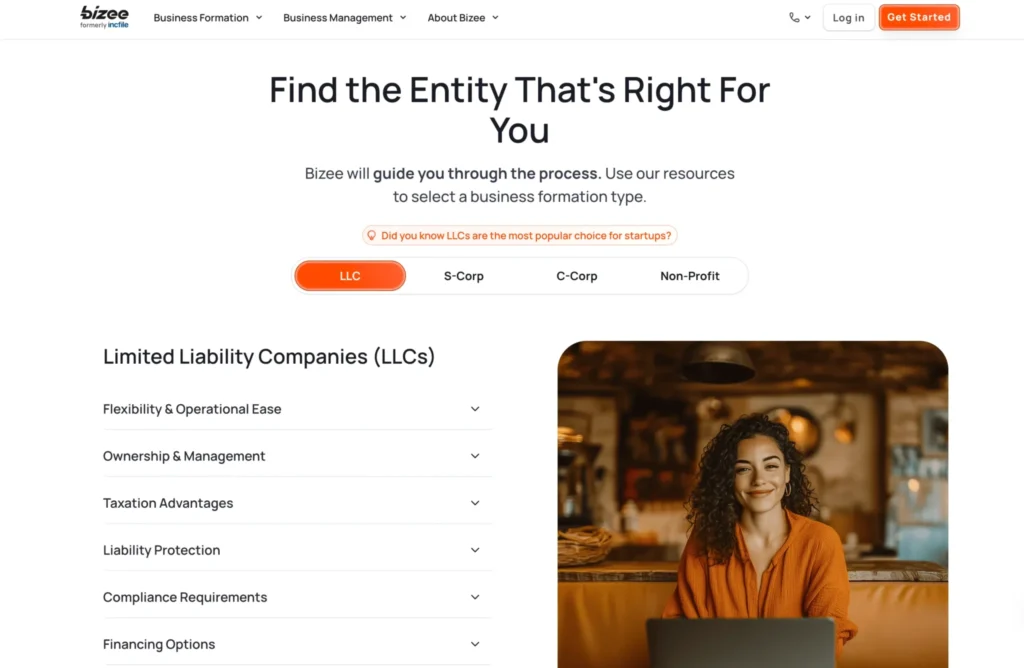
If you want the easiest and most affordable way to start an LLC online, Bizee is a strong option.
It is especially useful if you do not want to deal with state forms, registered agent confusion, or formation paperwork on your own.
Bizee is a good fit if you want a $0 formation package plus state fee, first year registered agent service included, a simple online filing process, state specific guidance, optional EIN help, optional business documents, and a company that has helped a large number of entrepreneurs form businesses.
It may not be necessary if you are fully comfortable filing directly with your state and handling every step yourself.
But for most beginners, convenience matters. A small mistake in business formation can create delays, confusion, or extra work later.
Bizee gives you a simpler way to get started.
Why Bizee Is a Good Choice for New Business Owners
The biggest reason to choose Bizee is value.
Many LLC formation services charge a service fee on top of the state filing fee. Bizee’s basic formation package starts at $0 plus the state fee, which makes it easier for new entrepreneurs to start without stretching their budget.
The free first year of registered agent service is another major benefit. Registered agent service is required in most states, and paying for it separately can add to your startup cost.
Bizee also keeps the process beginner friendly. You do not need to understand every state form before you begin. You can choose your state, enter your details, select your package, and let Bizee handle the filing.
For freelancers, online business owners, local service providers, and first time founders, that simplicity can make a big difference.
Starting a business already comes with enough decisions. Your LLC filing should not be the part that slows you down.
FAQs About Starting an LLC
Do I need a lawyer to start an LLC?
No, many people start an LLC without a lawyer.
If your business is simple, you can file yourself or use a service like Bizee. If your situation involves multiple owners, investors, complicated contracts, or legal risk, speaking with a lawyer may be helpful.
Can I start an LLC without a business?
Yes, you can form an LLC before you start operating.
But it usually makes the most sense when you have a clear business idea, a plan, or upcoming activity. Once you form the LLC, you may have state fees and compliance duties, even if the business has not made money yet.
Can I use my home address for my LLC?
In many states, yes. But your address may become part of public records.
If privacy matters to you, using a registered agent service or business address option may be better. Bizee’s registered agent service can help keep your personal address more private for certain public facing documents.
Do I need an EIN for a single member LLC?
Not always, but it is often useful.
An EIN can help you open a business bank account, hire employees, and separate your business identity from your personal tax identity.
Can I start an LLC in a different state?
Yes, but it is not always the best choice.
If you form in one state but operate in another, you may need to register as a foreign LLC in your home state. That can create extra fees and paperwork.
For most beginners, forming in the state where you actually do business is the simplest option.
Is an LLC better than a sole proprietorship?
An LLC usually gives better liability protection and a more professional structure than a sole proprietorship.
A sole proprietorship is easier to start because there is no formal state formation process, but it does not create the same legal separation between you and your business.
If you are serious about building a business, an LLC is often the better long term choice.
Is Bizee really free for LLC formation?
Bizee’s basic formation package starts at $0 plus the required state filing fee.
That means you still pay the state fee because every state charges its own filing cost. But Bizee does not charge an extra service fee for its basic formation package.
Final Thoughts: Start Your LLC the Smart Way
Starting an LLC is one of the smartest early steps many business owners can take.
It gives your business a legal foundation, helps protect your personal assets, supports cleaner finances, and makes your company look more professional.
The process is not hard once you break it down.
Choose your business name, pick your state, appoint a registered agent, file your Articles of Organization, create an Operating Agreement, get an EIN, open a business bank account, check licenses, understand taxes, and stay compliant.
You can do all of this yourself, but you do not have to.
If you want a faster, easier, and more affordable way to form your LLC, Bizee is one of the best places to start. Its $0 formation package plus state fee makes LLC formation accessible for new entrepreneurs, and the free first year of registered agent service adds even more value.
If you are ready to turn your business idea into an official company, Bizee can help you form your LLC without making the process feel overwhelming.